

Quick answer
Chinese Miao batik and Vietnamese Hmong batik share wax-resist dyeing roots, but they often differ in cloth, motif style, pattern density, and how the finished textile is used. The terms also need care: "Miao" is the official Chinese ethnic category, while "Hmong" is widely used by related communities in Southeast Asia and the diaspora.
This guide compares the two traditions without treating either one as a single fixed style. Village, family, and regional practice can change the look of the cloth.

Quick comparison
| Question | Chinese Miao batik | Vietnamese Hmong batik |
|---|---|---|
| Where is it associated? | Southwest China, especially Guizhou and nearby regions | Northern Vietnam and Hmong communities in the mountain regions |
| Common cloth | Cotton is common, though practice varies | Hemp is often associated with Hmong textile traditions |
| Visual feel | Dense motifs, borders, animals, plants, and geometric balance | Bold line work, repeating geometry, and cloth suited to clothing panels |
| Color habit | Strong blue-and-white indigo contrast | Indigo resist patterning, often later combined with embroidery or clothing construction |
| How to read it | Look for motif meaning and regional pattern habits | Look for garment context, hemp texture, and repeated line systems |
Miao and Hmong: why the names overlap
"Miao" is the official Chinese term for several related groups in China. "Hmong" is used by many communities in Southeast Asia and in diaspora contexts. Britannica notes that Miao peoples live across China and Southeast Asia, and that the category includes groups with different languages and cultural practices.
That is why "Miao vs Hmong" is not a clean split between two unrelated peoples. It is better to compare specific regional textile traditions: Chinese Miao batik from Guizhou or nearby areas, and Vietnamese Hmong batik from northern Vietnam.
Material: cotton and hemp change the line
Chinese Miao batik is often seen on cotton cloth, which can hold fine wax lines and detailed pattern fields. Vietnamese Hmong batik is often associated with hemp cloth, which has a different surface and a stronger woven texture. The material affects how the wax sits, how the dye enters, and how crisp the finished design appears.


Motifs: shared technique, different pattern habits
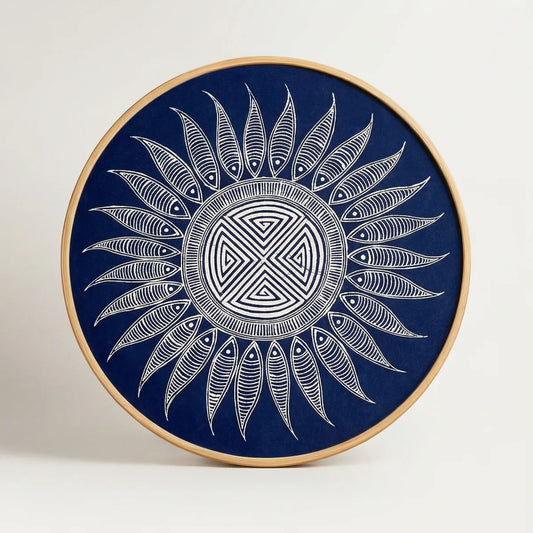
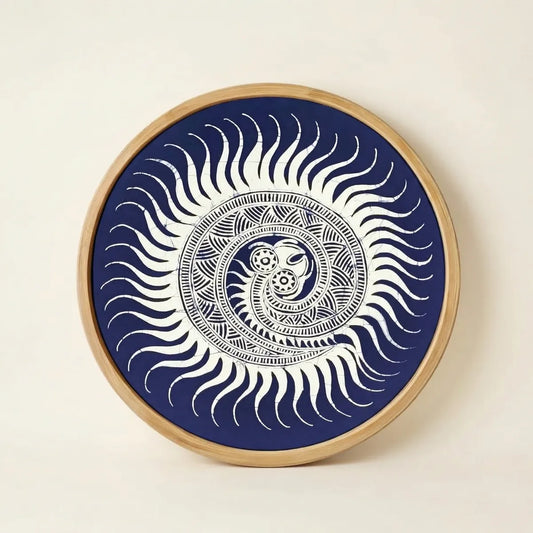
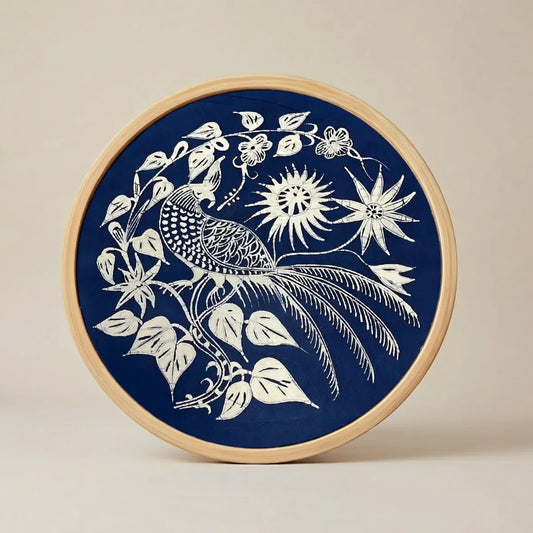
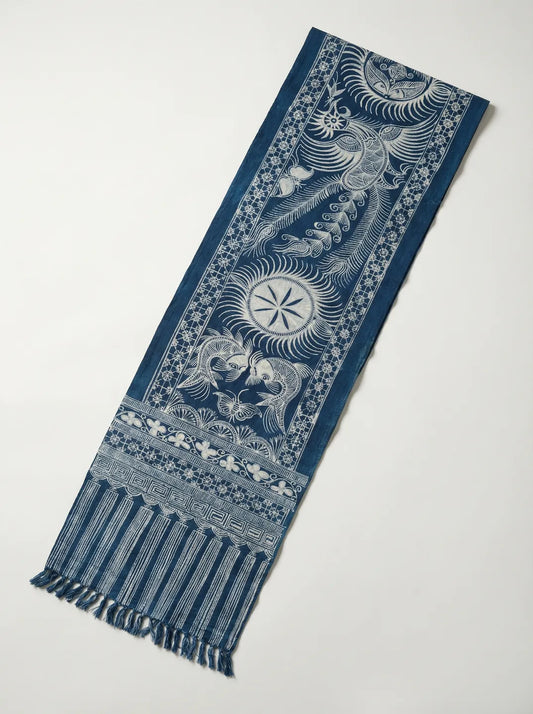
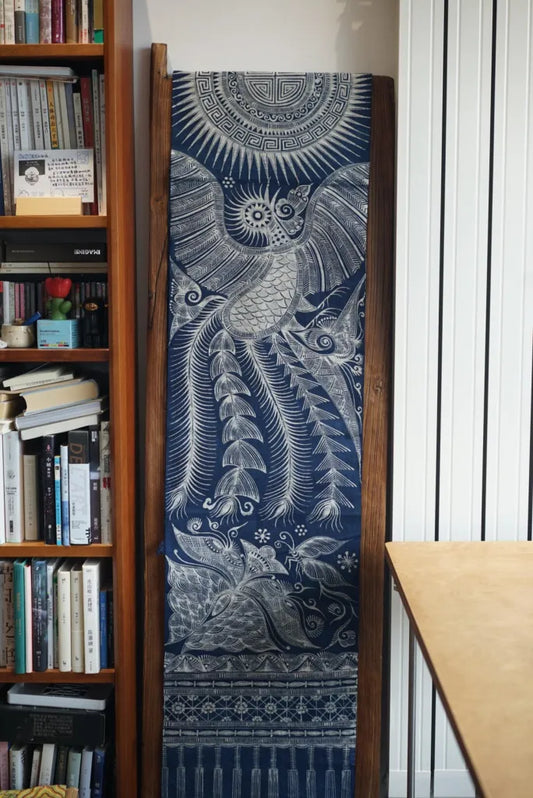
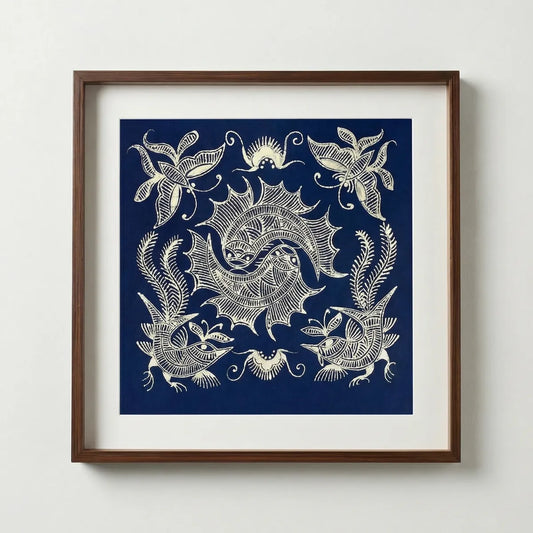
Both traditions use wax to reserve light areas before dyeing, but the design language can feel different. Chinese Miao batik often uses dense compositions with butterflies, birds, fish, flowers, spirals, borders, and geometric systems. Some motifs connect to stories such as the Butterfly Mother, while others relate to family, fertility, protection, or the natural world.
Vietnamese Hmong batik often gives more attention to garment panels, repeated geometry, and strong linear rhythm. The final textile may be worn, layered, embroidered, or constructed into clothing. In both cases, the cloth should be read as part of a living community practice, not as a single decorative style.
Technique: the same resist logic, different hands
The basic batik principle is simple: wax blocks dye. The difference sits in the tool, hand movement, fabric, and local pattern memory. A Chinese Miao artisan using a wax knife may create a very fine line network across a wall piece. A Hmong maker working on hemp for clothing may draw with different spacing because the cloth will later be cut, worn, pleated, or combined with other textile work.


How to identify the style when shopping or researching
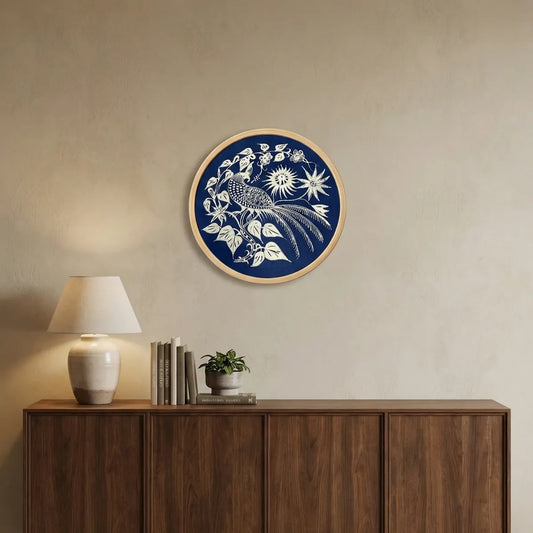
Look first at the product description. A good listing should name the region, material, technique, and whether the piece is handmade. Then look at the cloth. Cotton can support crisp details, while hemp often has a stronger texture. Finally, check the use case. A framed wall piece, table runner, clothing panel, and vintage textile fragment may follow different design rules.
If you are mainly interested in Chinese Miao batik, see RunyStore's Miao batik collection. If you want to understand the tool side, read What is a Miao batik tool?
Common misunderstandings
Are Miao and Hmong the same?
They overlap historically and culturally, but the terms are not identical in every context. "Miao" is an official Chinese category, while "Hmong" is widely used by many related communities outside China and in diaspora communities.
Is one batik tradition more authentic than the other?
No. Authenticity depends on the maker, material, process, and community context. Chinese Miao batik and Vietnamese Hmong batik are better understood as related regional traditions rather than one being a copy of the other.
Why do some pieces look very different?
Because batik is not one fixed pattern system. Region, village, family training, fabric, tool, and intended use can all change the final look.

For broader context on the people and terminology, see Britannica's overview of the Miao. For the dyeing method itself, see Britannica's explanation of batik as a resist process.
Tags:
Previous
Miao Batik Tools, Materials, and Dyeing Process
Next
Miao Batik: Meaning, Process, Symbols, and Indigo Craft