



What Is the Ice Crack Effect in Miao Batik?
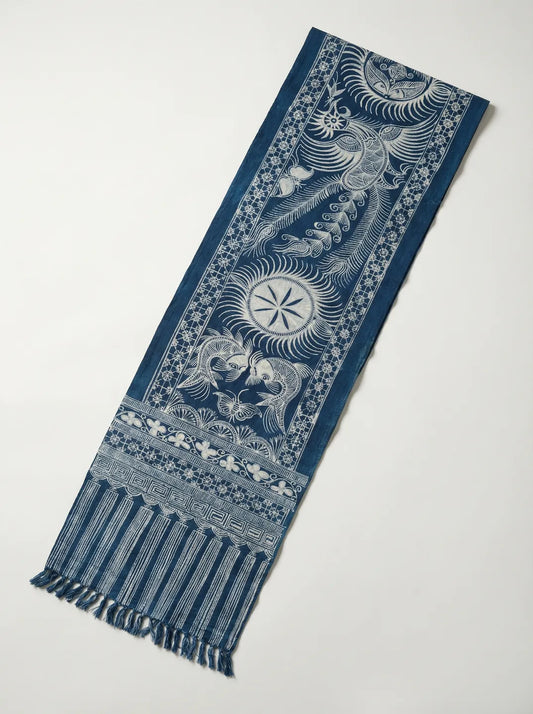
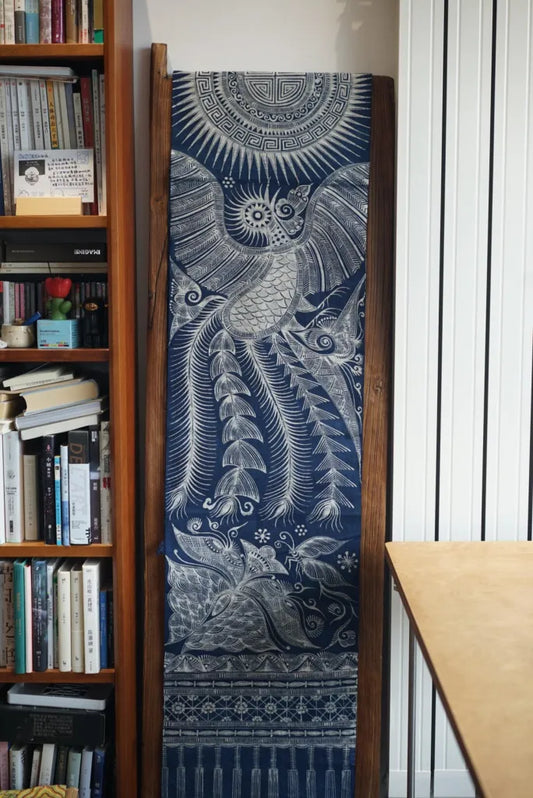
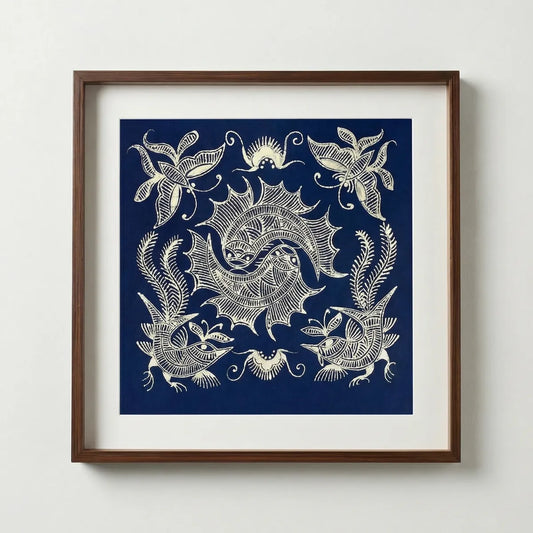
The ice crack effect is one of the small details people notice after they look at Miao batik for more than a few seconds. The main pattern may be a bird, fish, flower, or spiral. Around it, you may see thin broken lines running through the indigo.
Definition: in Miao batik, the ice crack effect refers to the fine, irregular marks made when dried wax cracks before or during dyeing. Indigo enters those tiny breaks, leaving a web of lines after the wax is removed.

Why the cracks appear
Miao batik is a wax-resist process. The maker draws hot wax onto cloth. The wax-covered parts resist the dye. When the cloth is placed in indigo, the exposed areas turn blue while the waxed areas stay pale.
Wax is not flexible forever. It cools, bends, and breaks in small places. If dye enters those breaks, it leaves hairline marks. That is the crackle people often compare to thin ice.

The process in plain steps
- Wax is drawn onto cloth. The maker uses a wax knife or similar tool to draw the design.
- The cloth is dyed. Indigo reaches the unwaxed areas and builds color over repeated dips.
- The wax shifts and cracks. Folding, handling, drying, and dyeing can open tiny breaks in the wax.
- The wax is removed. The finished cloth shows the white pattern, blue ground, and thin crackle marks.
Is ice crack a defect?
Usually, no. A light crackle is part of wax-resist dyeing. It is one reason handmade batik does not look like a flat printed image. In some pieces the crackle is subtle. In others it becomes part of the surface character.
There is a limit, of course. If the wax breaks too much, the pattern can lose clarity. The useful question is not "are there cracks?" but "do the cracks support the design or distract from it?"
How to read the crackle
Look at where the thin lines appear. Natural crackle does not usually repeat in a perfect grid. It follows stress in the wax. You may see it near folds, larger blue areas, or parts of the design where the cloth moved during dyeing.
If every crack line looks identical, or if the texture repeats like wallpaper, it may be printed crackle rather than wax crackle.
What crackle can and cannot tell you
Crackle can tell you that the surface has gone through a wax-resist process, or at least that the maker wanted to show that effect. It can also help you notice how the dye entered the cloth. What it cannot do is prove the whole piece by itself. A strong handmade textile still depends on drawing control, dye depth, fabric quality, and the way the composition holds together.
Think of ice crack as one clue in a larger reading. If the crackle is paired with hand-drawn line variation, uneven dye depth, and a back side that shows the color has entered the fabric, the case for handmade batik becomes much stronger.
Why this matters for Miaozu culture content
For people who search "Miaozu" after seeing a social post, the ice crack detail is useful because it turns a beautiful image into something understandable. It gives the viewer a way to see the maker's process, not just the finished blue-and-white surface.
The official China Intangible Cultural Heritage archive describes Miao batik as a traditional technique passed down in regions including Danzhai, Anshun, and Zhijin. Google Arts & Culture's Miao batik feature also explains the basic wax-resist idea: wax is used to draw patterns before dyeing.
When shopping, look for close-ups
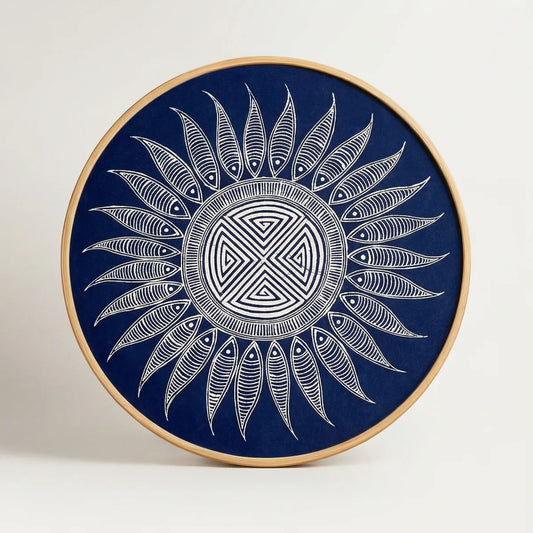
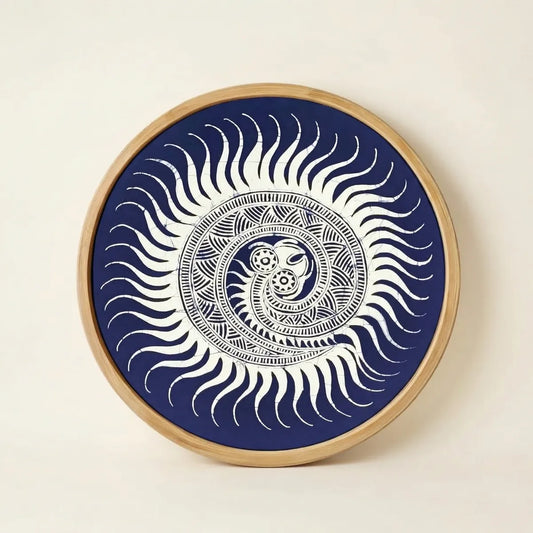
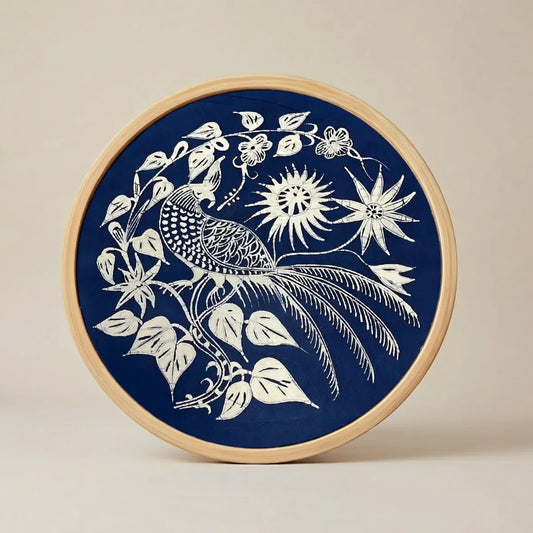
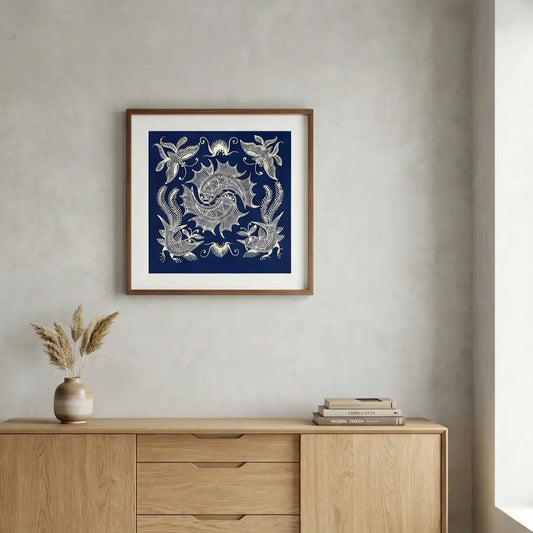
A good product page should show enough detail for you to see the lines. If you only see one distant lifestyle photo, ask for a closer image. You want to see how the white lines sit on the indigo, whether the dye has depth, and whether the crackle feels natural.
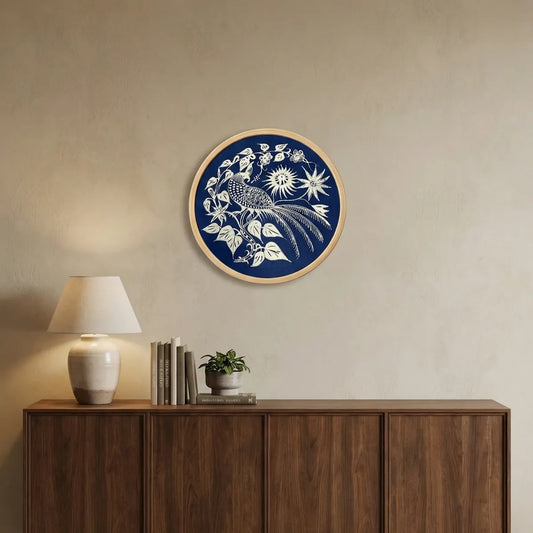
It also helps to compare a close-up with a full-piece photo. The close-up shows line texture, but the full image shows whether the crackle belongs naturally to the whole design. A small detail can look impressive on its own and still feel weak if the overall pattern is poorly balanced.
For the larger craft background, start with our guide to Miaozu culture, batik, and traditions. To compare handmade pieces with printed cloth, read how to tell handmade Miao batik from printed fabric.
Sources and further reading
See the China Intangible Cultural Heritage page on Miao batik and the Google Arts & Culture feature from the Nationalities Museum of Central University for Nationalities.
FAQ
Does every Miao batik piece have ice crack marks?
No. Some pieces show very little crackle, especially if the wax stayed stable and the cloth was handled carefully.
Can printed fabric copy the ice crack look?
Yes, prints can imitate crackle. The clue is repetition. Real wax crackle tends to be irregular and tied to how the cloth moved.
Does more crackle mean better batik?
Not always. Better batik is about drawing, dye control, composition, and material. Crackle is one detail, not the whole standard.
Explore handmade indigo pieces in the Runystore Miao Batik collection.
Tags:
Previous
How to Read a Miao Batik Textile: A Beginner's Visual Guide
Next
What Does Miaozu Mean? A Clear Definition With Cultural Context