

Quick answer
Miaozu is the pinyin form of the Chinese word used for the Miao ethnic group. When people encounter Miao batik, silver ornaments, pleated dress, embroidery, and festival clothing, they are often looking at visible parts of Miaozu culture.
Guide sections
Miaozu is easiest to understand when the word stays close to the people, objects, and traditions it refers to. Batik cloth, silver adornment, embroidered dress, and festival wear are not separate from the culture. They are some of the clearest ways the culture becomes visible.
That is why many readers first connect with Miaozu culture through craft. A textile, a silver headdress, or a hand-drawn motif can reveal much more than a label on its own.

What does Miaozu mean?
Miaozu is the Chinese pinyin term used for the Miao ethnic group. In practice, the word often appears beside references to Miao villages, batik, silverwork, embroidery, traditional clothing, music, dance, and festival life.
For overseas readers, the most useful way to approach the term is through those real cultural forms. The word does not describe one single object or one single costume detail. It points to a people and to the cultural traditions associated with them.
Why batik is a useful entry point
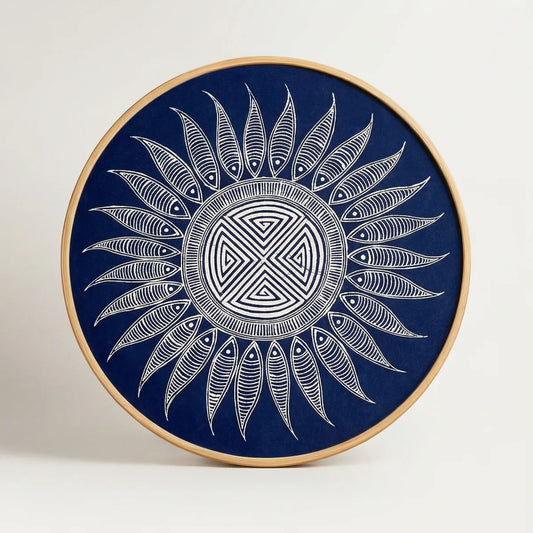
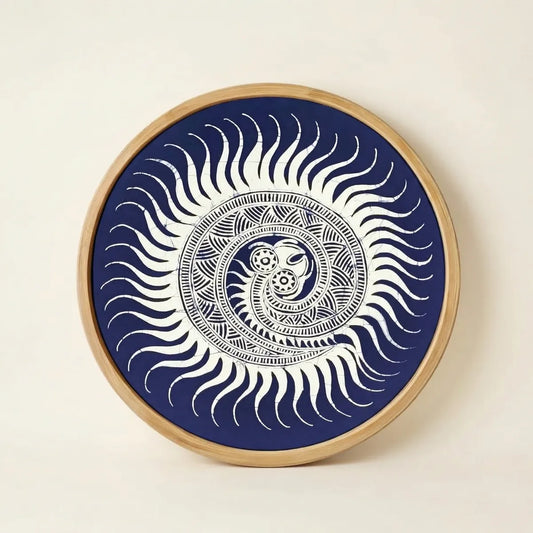
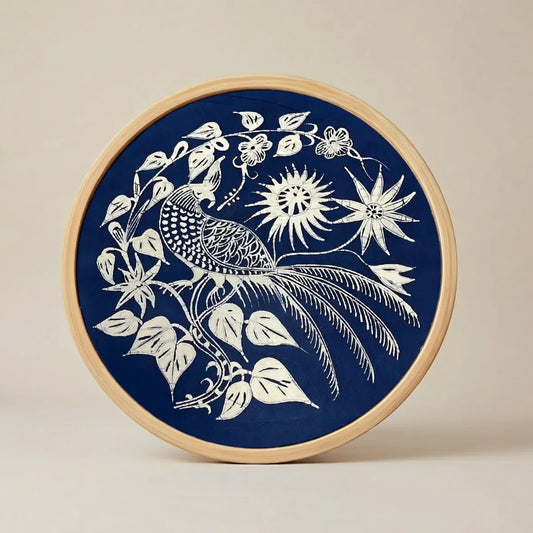
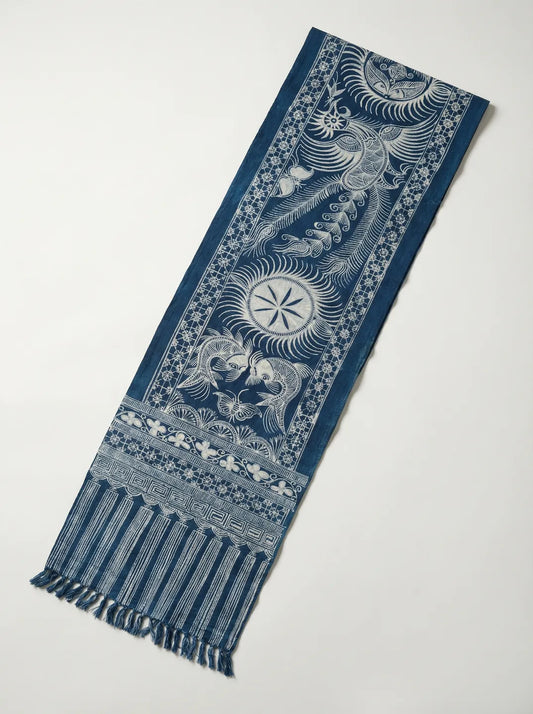
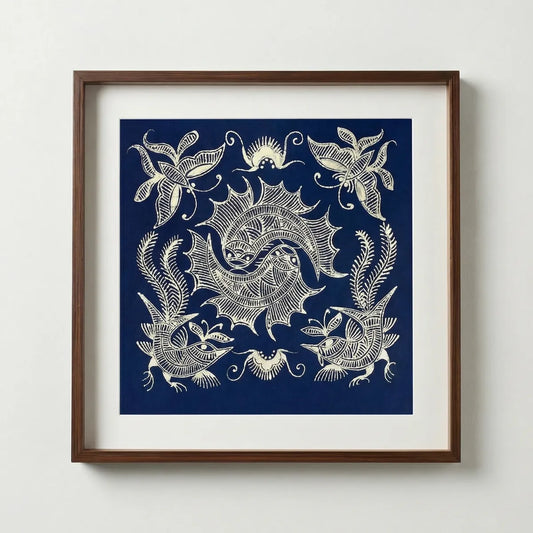
Among the many crafts connected with the Miao people, batik is one of the easiest to recognize. Wax is drawn on cloth before the fabric is dyed in indigo. When the wax is removed, the cloth shows white lines and shapes against a blue ground.
The process is slow and physical. A maker draws directly on the fabric, then dips it into dye until the color reaches the desired depth. Small crack marks in the wax can create fine lines in the finished cloth. Those details are part of what makes handmade batik feel alive.

What the patterns usually mean
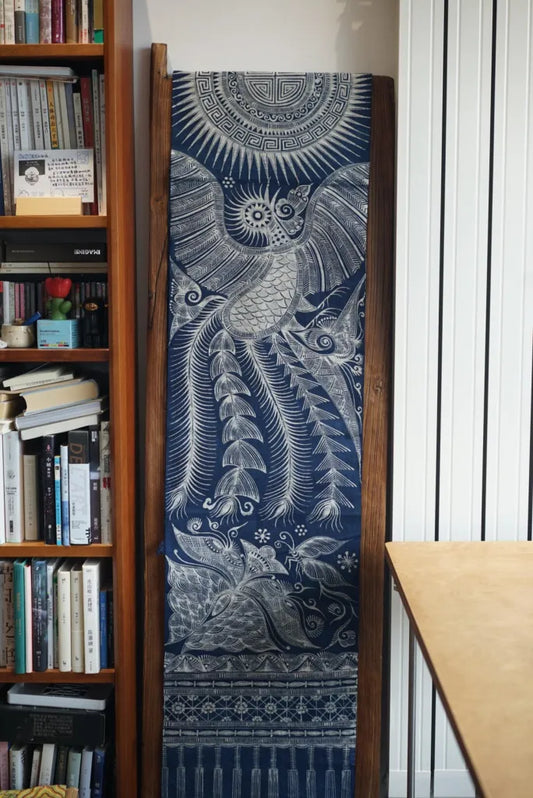
Miao batik patterns are rarely just decoration. They often refer to family memory, belief, nature, migration, blessing, or continuity. Different villages and makers use different motifs, but several themes appear again and again:
- Butterfly Mother - often linked to origin, ancestry, and life.
- Fish and birds - motifs that can suggest abundance, movement, or connection.
- Spirals and flowing shapes - forms often associated with rivers, paths, or remembered journeys.
- Mixed pattern fields - layered layouts that combine several meanings within one cloth.
For a fuller guide to motifs, read Miao batik pattern meanings. For a story-led introduction, read Butterfly Mother in Miao myth.
How to tell handmade batik from printed fabric
For many first-time buyers, this is the next practical question. Handmade batik usually shows small line changes, natural wax crackle, and subtle dye variation. Printed fabric often repeats the same mark too evenly from edge to edge.
No single detail proves everything, but together they help you judge whether you are looking at handwork or at a printed imitation. If you want a closer comparison, read How to tell handmade Miao batik from printed fabric.
Common cultural forms
Batik is one entry point, but it is only one part of a wider cultural picture. Miaozu culture also appears in silver ornament, hand embroidery, pleated dress, festival clothing, story motifs, and household textiles. These forms work together rather than standing alone.
| Form | What it shows | Where to continue |
|---|---|---|
| Miao batik | Wax-resist indigo textile craft with hand-drawn motifs. | Browse Miao batik pieces |
| Miao silver | Silver-colored ornaments linked to dress, ceremony, and family display. | Read the Miao silver guide |
| Miao embroidery | Hand-stitched textile work that often appears beside batik in dress and accessories. | Read the Miao embroidery guide |
| Festival dress | Layered clothing that brings batik, silver, and embroidery together in one visible form. | Read about Miao ceremony traditions |
Seen together, these forms explain why Miaozu culture often feels easier to understand through real objects than through a single definition.
How Miaozu culture fits into modern life
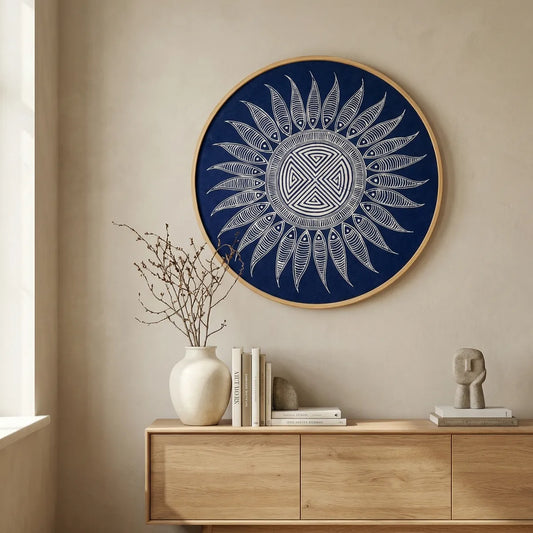
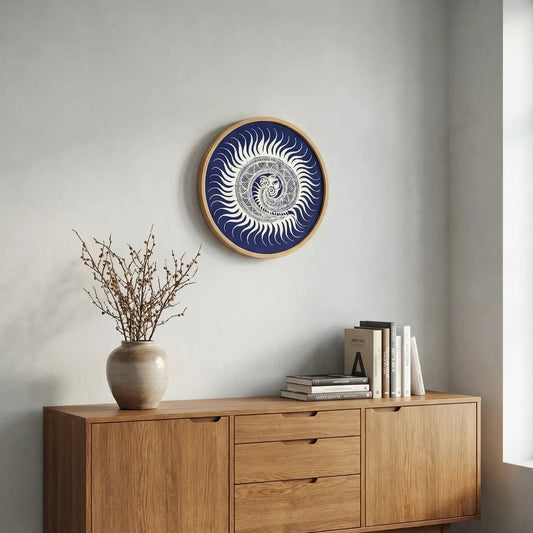
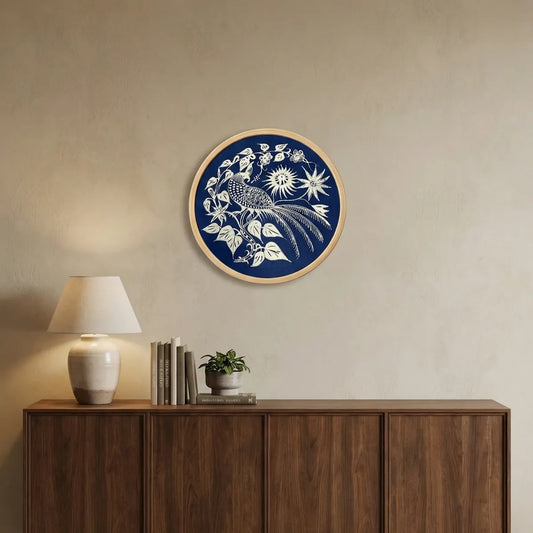
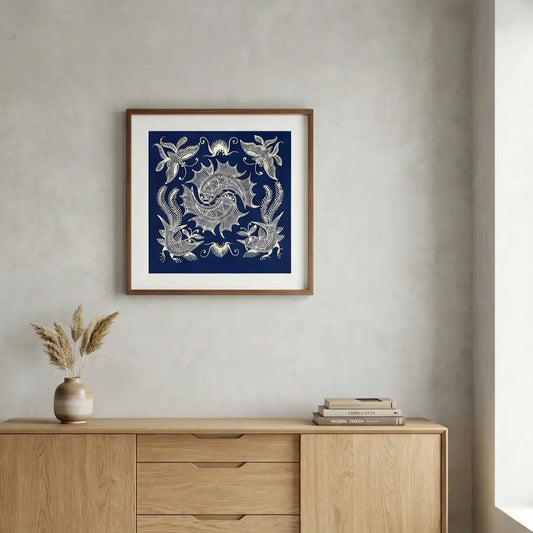
People do not only encounter this work in museums or research books. They also bring it into modern homes through framed batik, wall pieces, runners, scarves, bags, and other handmade objects. Indigo and white are easy to live with, and hand-drawn pattern gives the textile presence without making a room feel heavy.
If you are starting with finished pieces rather than collecting raw cloth, wall art and ready-to-display textiles are usually the easiest first step. They let the pattern and handwork speak for themselves.

Related shopping
If you want to explore pieces shaped by this tradition, start with our Miao batik collection. If you are looking for something ready to hang or display, batik wall art is often the easiest way to begin.
How to keep learning
If you want more background on the people and the broader cultural setting, continue with What does Miao mean? and What is a Miao ceremony?. If you want to go deeper into the making process, our Miao batik tool guide and related batik articles will take you further into the craft itself.
FAQ: Miaozu culture
Is Miaozu the same as Miao?
Miaozu is the pinyin form of the Chinese term used for the Miao ethnic group.
Is Miao the same as Hmong?
The terms overlap in some contexts, but they are not always exact synonyms in every historical or regional setting.
Why does batik matter so much in Miaozu culture?
Because batik is one of the clearest visible traditions through which pattern, handwork, and cultural memory are carried forward.
What should a first-time reader focus on?
Start with the basics: what the term refers to, how batik is made, and how silver, embroidery, and dress help make the culture visible.
Tags:
Previous
How to Choose a High-Quality Miao Batik Wax Knife
Next
Yang Erlang: The One-Armed Miao Batik Artist Story